Ilias Venezis
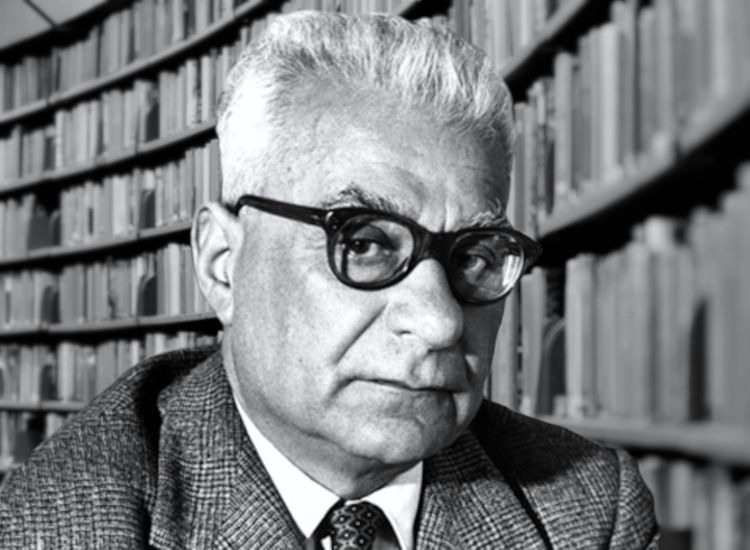
Elias Venezis was a Greek writer, one of the most important exponents of “Generation of Thirties”. His work looks at all the facts that came before or followed the uprooting of Greeks of Minor Asia. Experiencing himself the brutality of the war and the cruelty of persecutions, he created a work almost autobiographic, which worked as a loud protest about the crimes against humanity that usually take place in the wars.
Elias Mellos (Venezis was his pseudonym) was born in Aivali in Minor Asia. His parents were Vassiliki Mbimbela and Michael Melos. When the First World War started, they moved to Mitilini, where he finished school. After the landing of the Greek Army in Minor Asia, the family returned to Aivali and Venezis started preparation for his studies in Paris. But his plans got cancelled when the Minor Asia Disaster began and he couldn’t abscond to Greece with his family. He was arrested by the Turkish army and he were sent to the “Labor Battalions” with other 3000 Greek habitants. After 14 months, he was set free and he was one of the 23 hostages that survived.
After his release he went to Mitilini with his family. There, he worked as an employee at the National Bank. He met Stratis Mirivilis, who encouraged him to write about his captivity. His experiences were published as a sequel in Kambana, Statis Mirivilis’ magazine. Finally, in 1931, he published this sequel as a novel by title The Number 31328 (the number that he used to have in Labor Battalions). In this book Venezis described with a very realistic way on of the darkest pages of the worldwide history. Actually, he created an antiwar novel, which didn’t feature bad or good people, winners and losers. His goal was just to show the cruelty of the war and the atrocities which were committed by Greek and Turkish people. With this novel Venezis established himself as a writer and became well-known to the literature circles of Athens.
In the meantime, he moved to Athens. In 1938, he got married to Stavritsa Moliviati and they had a daughter, Anna. One year later he brought out his book Serenity, which was awarded with the National Literature Award and took a merit from the Academy of Athens. In this novel, he described the adventures of refugees when they moved to Greece.
In December 1943 he got arrested at his work place by German Es-Es. They took him to Averof prison, in prison cell which was called BLOCK C. In this cell they used to imprison people who they wanted to kill. But after the passionate reactions of the intellectual elite they released him. After this, he wrote a play called Block C that was based on his experience. In the same year in October his novel Aeolian Land was published. It presented the Greeks’ happy life in Minor Asia before the persecution. The first edition sold out in two weeks. His work was already acclaimed in Greece and it started to be translated in many languages, introducing with this way the Greek literature worldwide.
With Aeolian Land it seemed to close a very important circle for Venezis’ work. He was me able to present the theme of persecution with honesty, completeness and the minimum emotional involvement. Except for these three novels, Venezis wrote short stories, travel books and history books.
Other writers gave him recognition and he was a very popular writer. In 1957, he was elected as a member in the Academy of Athens. He died in 1973 in Athens from pharynx cancer.