Wedding, Crete
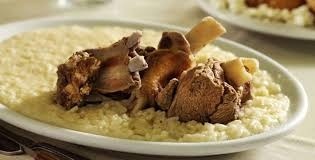
As for Crete, here the wedding holds some days and nights! Raki flows unceasingly, the kserotigana (fried pastry) are at the forefront, as well as the world-famous gamopilafo(wedding boiled rissoto). Also, after the mystery is over, the couple goes to the groom's house, where the bride must eat the nuts offered by her mother-in-law before she enters. In Crete, walnuts with honey are offered to the unmarried at the time of the mystery, in "Isaiah dance ...".
Chania
• A custom that dominated a few years ago was that of dowry. The bride as single was preparing her dowry, which usually included linen, clothes, lingerie, kitchen utensils and decorative items. All of these were either bought or handmade by the bride and her mother. The dowry on Thursday before marriage was transferred to the couple's future home with wagons, horses, cars or trucks many times. Indeed, the bride before she carried the dowry to her future home used to hang her in her own home for anyone that wanted and wish her. The custom of the dowry no longer exists only in a few cases and in isolated villages.
• On the Thursday before the wedding the "wedding bed" is made. Unmarried girls, friends or acquainted with the bride take over the making of the wedding bed with white sheets and a white handmade blanket. The mattress is decorated with bonbons and rice. An unmarried girl will roll in the bed to make the first night of the wedding fertile. Others put the babies of friends or family on the bed, a symbol of fertility. Attendees wish the bride and throw money on the bed. Making the bridal bed and the whole process symbolizes fertility, well-being, good living and economic growth.
• Before marriage, the bride writes on the soles of her shoes the names of her friends who have not yet got married. Whichever names are erased are the ones to be married in the future.
• As long as the bride prepares for the mystery, parents, siblings and relatives put inside her shoe money, a little help in starting her life married.
• On the wedding day the bride will be prepared with the help of her family, relatives and friends. The bride's father is the one who will help her wear her right shoe. The groom must not be present because this is considered bad luck. The groom is forbidden to see the wedding dress before marriage, he usually sees it for the first time when the bride arrives at the church.
• The bride must not be in the church at the appointed time of mystery. She must delay a few minutes, extending the groom's anxiety about whether or not to come.
• The bride arrives at the church with her father and her older brother at her side. They will hand her over to the groom. The rest of the family, relatives and friends follow behind.
• During the ceremony the groomsmen give the wedding rings to the priest and cross the wreaths over the head of the newlyweds three times. The wreaths are joined with a white ribbon symbolizing the unity of the couple.
• As long as the ceremony lasts, everyone waits for the moment the priest says "and the woman is afraid of the man." The bride must then step on the groom's foot to show that she is not going to be afraid of him or controlled during her married life. However, there are cases where the groom considers this offensive and the first breach between the couple happens.
• When the Isaiah's dance begins, the famous rice war is a must. The guests throw to the couple rice to put down roots. Usually the couple's friends empty whole bags of rice on their heads.
• As soon as the ceremony ends, parents, relatives and friends hang jewelry to the couple or give them money for good luck and prosperity.
• After the ceremony, the bride, the groom and their families remain in the church, set up in turn and the guests one-on-one pass to greet and wish them.
• When the mystery is over and the newlyweds are heading for their home or the reception area, the cars that accompany them must honk very loudly, making a lot of noise.
• If the newlyweds go first from their new home before going to the center, the two mothers have to wait there and welcome them by giving them honey with walnuts that will be offered in silver spoons. Walnuts, due to the fact that they break into four parts symbolize the bride, the groom and the two families.
• When the couple arrives to the reception area, the bride calls on the track her friends and her acquainted who are not yet married. There, without seeing them, she will throw them her bridal bouquet. The one who will catch it is going to be married in the future.