Wedding, mores and customs
THE WEDDING SYMBOLS
White Wedding Dress
White was not always worn at weddings, but was established as the color of the marriage during the Victorian era, and with the passage of time it was established in all marriages at all lengths and widths of the world. It was chosen as the color that symbolizes purity and innocence.
Veil
The veil in the older years was covering the whole face of the bride. This was so that the face of the bride was not exposed to the "evil eye".
Bridal bouquet
The custom of the bridal bouquet comes from ancient Rome, where brides held bouquets of different herbs with distinctive symbolisms, such as purity, fertility, longevity, etc.
Wine
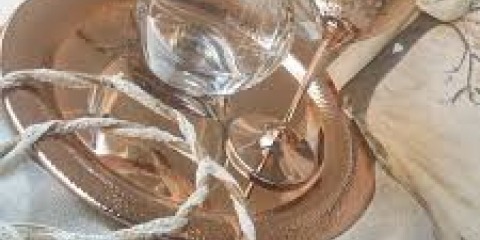
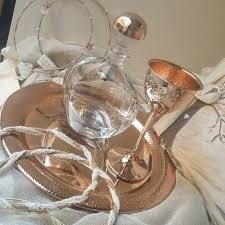
During the mystery, the groom and the bride drink from a sip of wine each one from the same glass. This movement symbolizes the community of moments in their lives. It means that from now on they will share all the moments of life together, joys and sorrows.
The position of the groom and the bride during the mystery
The groom and the bride during the ceremony stand next to each other with the bride being standing on the left of the groom. This position has two meanings. It connotes that a man and a woman are equal, and that is why they stand on the side of the other and the woman stands on the left of the man because Eva was made from Adam's left flank.
Wedding rings
Wedding rings are an ancient Roman custom. The Romans were wearing them on the fourth finger of their left hand because they believed that the vein that connects directly to the heart passes from there. Nowadays the Orthodox are wearing the wedding ring on the fourth finger of their right hand and the Catholic are wearing it on the fourth finger (ring finger) of their left hand
Wedding wreaths
Wreaths are royal symbols. With marriage, a new kingdom, house and family of the couple are created. The priest, after blessing the wreaths on the gospel, makes the point of the cross over their heads and invokes God himself to crown them with glory and honor in their new little kingdom, where they should rule with prudence, wisdom and justice. The wedding wreaths also recall the wreaths of the martyrs, highlighting the martyrdom of Christian life and the immense sacrifices that need to be made in the marriage, so that the husbands can come to completion.
Candles
During the wedding ceremony, the candles, that are located opposite the couple, right and left of the table of the mystery, remain lit. The lighting of candles as it comes to the prayer in the Orthodox tradition, symbolizes the light of Christ, which lighten and sanctifies every "man coming into the world". It also symbolizes the flames of the Pentecost.
The candles are brought to the Church without have been lit, and they are taken lit. They are always in front of the couple, symbolizing the light of Christ, which they take from the Mystery that will lighten their way into their new lives.
Entrance to the new house
The custom wants the groom to pick up the bride in his hands before entering their new home. In antiquity they believed that by holding the bride in groom’s embrace he showed his attempt to protect her from the evil spirits that wanted to touch her.
Honeymoon
During the Middle Ages, the newlyweds spent a whole month alone, until the moon loss, enjoying among others a drink made of honey. This is why this period was called the honeymoon
GENERALLY
Vlamides: The groom will have to send some of his friends or the groomsman to bring the bridal shoes. She should have difficulty putting the shoe in order to put her money in. When the money comes in, her foot will be ready to fit into the shoe.
Names on shoe: In the sole of her shoe, the bride must write all the names of her unmarried friends. All the names that will be erased during the wedding will be directly married.
Fix the Groom: Tradition harasses the groom. It is customary for the bride to be late to reach the church to harass the groom. Although not married yet, and the groom is already in trouble.
Step on his foot: During the mystery when the priest says "and the woman is afraid of the man", the bride steps on the groom's foot. This way she shows that she does not fear him at all.
Making the bed: It takes place two or three days before the wedding. Relatives and friends are gathered at the house where the couple will stay after the wedding and make the bed of the couple in the bedroom. They lay a bed sheet (bottom fitted sheet, bed sheet, pillowcases, blanket), they throw rice on the bed so the couple will not have problems, throw money, to have good finances in life and flower-petals. In the end, they throw a child on the bed, a boy whose parents are both in life, so the couple will have children. Making the bed is done by the bride's friends whose parents are both alive. Treats with sweets, soft drinks, drinks follow.
Wedding Bouquet: The bride after marriage, before getting into the groom's home, throws the bouquet to the unmarried. Whoever catches the bouquet will get married during the year. That's what the custom says. In the last few years, the throwing of bouquet is taking place out of the church or in the centre where the wedding party takes place. Usually, a second bouquet is being made to been throw naway because the bride wants her own to keep it as souvenir.
In some places there is a similar custom for single boys. The groom sets the bride to sit on a chair, pulls on the wedding dress, pulls off her garter and throws it to the boys.
The treat of mother-in-law to the bride: The mother-in-law (groom’s mother) awaits the couple in their new home with nuts and honey. Honey symbolizes sweet life and walnuts is a symbol for having children. Underneath the doormat, the mother-in-law puts a steel rod so the newly-wedded couple will step on it and be strong like iron. She also puts a little cotton on her bride's chest and wishes her to "whiten, grow old like the high mountains" and to spend her life on her son's side.
Wedding candies: At the wedding day, when they start to clothe the groom, some wedding candies are put in his jacket pocket. After the wedding mystery, these wedding candies are shared to the unmarried girls of relatives and friends, who put the candies under their pillow to dream of the man they are going to marry.
Beliefs: While the bride is coming out of her family house, if she turns to look back, her children will resemble her.
When the bride walks away from her parents’ house, she dances with her father the farewell dance. By entering the bridal car, the bride should not look back at her family house, nor return (even if she has forgotten something) because it is considered to be bad luck.
Almonds - Sumada
Studying the mores, customs, traditions and symbols of marriage in our home country, we see they are countless. Every place is a story. Every corner is a surprise.
Among the lively traditions of Greek wedding sweets and drinks is - and perhaps holds first place - the famous sumada, the long-held trademark of a wedding that tends to become a favorite today. Sumada, the typical wedding and engagement drink, has a special symbolism.
It is first made from almonds, which is a symbol of fertility and is directly linked to marriage and because of its white color it is also a symbol of purity. It's no coincidence that the wedding sugared almonds are made from almond and sugar, for a sweet life! Sumada (made from almonds, almond mlk), drunk in the winter with a little cinnamon and cool in the summer with ice cubes, offers this wonderful almond aroma. It is the symbol of marriage and celebration in many areas of Greece - from Crete to Chios, Sifnos, Andros, Lefkada, Nisyros. In Chios it is even made with bitter almonds. Its origin is Asia Minor and in the Ionian Islands they are offered with coriander little rusks.
So we see that the scepters in the tradition of marriage in our country are held by the almond, which is why in many places the almonds sweets are the sweet of the marriage.
Other costumes
The wedding was always Sunday and usually Spring, Summer and Autumn, except for the month of May (the donkeys were mating), the Lent, and the leap years.
Offering months were defined as the empty months, ie months in which basic and timely agricultural work was not carried out (sowing, harvesting, gathering, etc.).
The groomsman was the groom's godfather. If the groom's godfather was not alive, then one of his children would change their wreaths. If, again, there was a "obstale ", then the groom was free to choose the best man.
The groomsman, as a rule, also baptized the couple's first child.
From those years the free women would take the dragee from the wedding disc to put on their pillow. They believed that they would marry the man they were going to dream of.
The parents in law shouldn’t meet each other and if they did, they changed their way. If that were not the case, in the year one of the two mothers in law would get hurt.
A somewhat strange custom was this: Both at the groom's house and at the bride's house, the parents in law were trying to get something , without being seen. Of course a very few did so. Many times they did, and when they left, outside the door, they presented the trophy, which was a glass, a fork, a towel, or some other trifle, which they returned.